I buy the ₹20 bottle. For most of my life, the ₹300 one sitting next to it on the shelf looked like a punchline. Same liquid. Same thirst. One of them just went to a better school. Water is water, so how does anyone pay fifteen times more for the exact same molecule? That question is the reason a few of us ended up spending weeks watching strangers drink.
We went looking for the answer in people's hands
So we did the unglamorous thing. We walked through malls, hypermarkets, the corner supermarket, and the kind of store where a bottle of water costs more than the meal I'd normally eat. We watched. What people reached for. What got handed to them the moment they asked for "just water." The first surprise was how boring the answer was. Across the entire price ladder, mass to luxury, the same one or two brands kept showing up in people's hands. Not because everyone loved them. Because they were safe. Serve the obvious brand and nobody judges you for it. The default had quietly become the "correct" answer, and correct is comfortable.
Then the names started to sing
Every bottle that dared to cost more borrowed the same wardrobe: a mountain, a spring, a valley, a glacier. A place you could almost point to on a map. Premium water sells you a postcard. It rents credibility from nature, because if it fell from a peak you'll never climb, surely it's cleaner than whatever runs through your tap. One brand played a completely different game: loud, strange, impossible to ignore. Liquid Death built an entire personality out of refusing to behave like water at all. But it was the outlier. The brand people actually reached for most had almost no personality to speak of. What it had was distribution. It sat in every fridge, every counter, every checkout line, until its name quietly became the word for water itself. People asked for it by name and assumed they were simply asking for a bottle.
The water shots
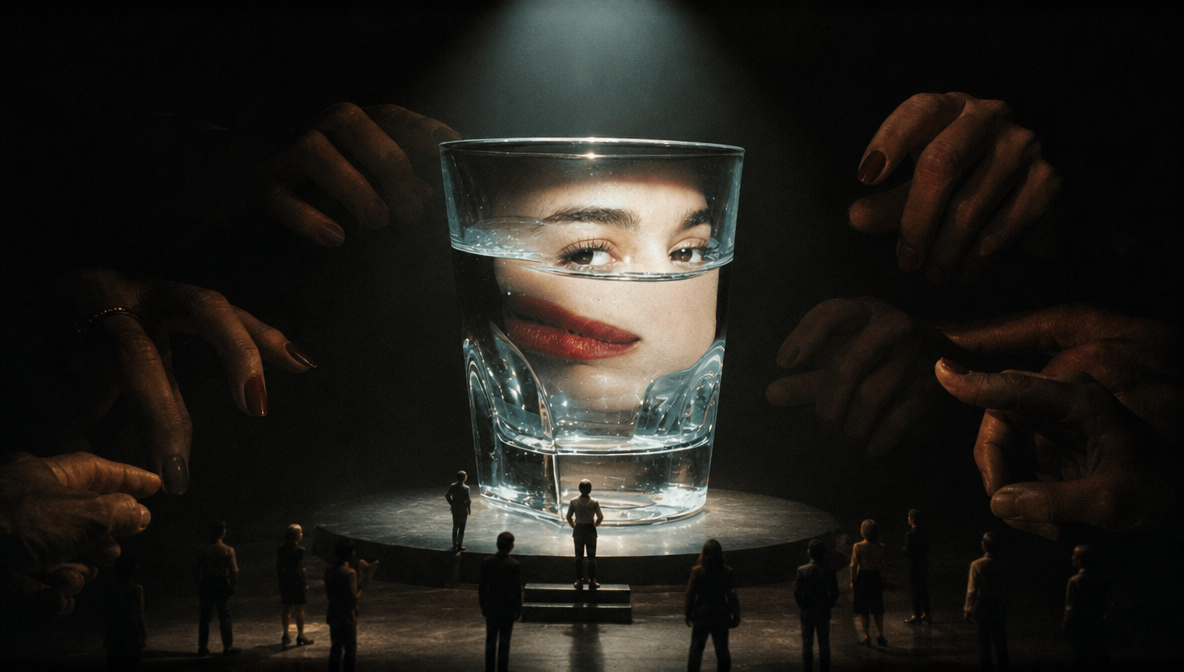
To pressure-test our own snobbery, we ran what we started calling water shots. A room full of people, a line of unlabelled cups, one instruction: rank them, best to worst. Then we brought out a TDS meter and a pH strip and showed everyone the actual numbers behind their favourites. Two things happened. The rankings scattered. One person's "best" water sat near the bottom of someone else's list. And the mood shifted from playful to genuinely curious. The next day, people came back holding bottles they'd filled at home. They wanted their water tested. Their tap. Their filter. Their mother's kitchen. That was the moment the whole thing cracked open. People don't want to be told what good water is. They want to discover it. Hand someone a number they can't fully explain, and you've given them a small mystery to carry around.
What those weeks actually taught us
Water is behaviour wearing the costume of a beverage. The person who grabs the ₹20 bottle and the person who collects the ₹300 one live different days. Different rituals, different signals, different stories they tell themselves at the shelf. The infused-water crowd is a tribe of its own again. It's a lifestyle, worn in public, one sip at a time. India makes this louder than anywhere. Water tastes different from one household to the next: the pipe, the filter, the vessel, the memory attached to it. Everyone already carries a deeply personal relationship with water. Most brands simply talk over it.
So we followed the people
Especially the young and the newly-arrived, the ones who move cities for work and have to build a life out of strangers. They hunt for events. Board-game nights, run clubs, open mics, supper clubs. Anything that turns a room of unfamiliar faces into a table of people actually talking. That hunt is now a market, and a loud one. India's live-events economy has swelled to roughly ₹17,000 crore, and 78% of Indians now say they'd rather spend on an experience than a thing, per an EYParthenon and BookMyShow report. The whole category is compounding at around 8% a year. People are buying their way into rooms, into belonging, into a story worth retelling on Monday. Experience became the status symbol. Connection became the thing everyone was quietly shopping for. And here's the catch. People show up to these rooms wanting to connect, then freeze at the one step that decides everything: starting. You walk in, you clock a table of strangers, and your mouth forgets its job. The ache is tiny and universal. It's the two seconds before "hi," the moment someone has to break the silence and nobody wants to go first. Two behaviours had surfaced. One craving connection. One craving mystery. So we built one brand for each, and made sure they shared nothing but H₂O.
Two bottles, zero things in common
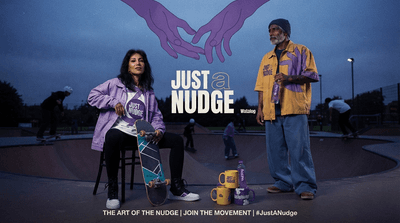
The social one, the connector. We borrowed its logic from industries that have nothing to do with water: the toast that gives a table permission to begin, the deck of cards that turns strangers into a game, the shared plate that quietly says stay a while. This bottle does the same job. You slide it across the table when the conversation stalls. You pass it to the person who just walked in alone. It carries the first "hey" so nobody has to invent one: a small nudge that dissolves the awkward stage. And here's the part that made us grin. The same pass-it-on that solves a person's awkward pause solves a brand's oldest problem too: distribution. A bottle built to travel hand to hand is a bottle that sells itself. And 88% of people trust a recommendation from someone they know over any advertisement ever made, per Nielsen's Global Trust in Advertising study. One design decision, two problems solved. The drinker gets an easier room. The brand gets a salesperson at every table. ;)
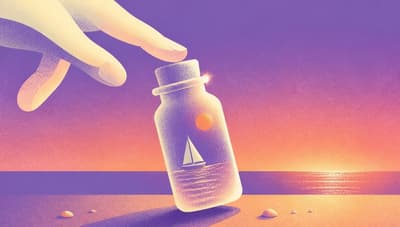
The other one, Glater. Built from the opposite instinct entirely: exclusivity. The quiet, magnetic pull of the thing most people aspire to and work years to earn. Glater skips the room and lets the room lean in. Fun, a little mysterious, expensively calm, the bottle that passes most hands on its way to yours. It's built to make you pause and sip, to turn a gulp into a moment and a swallow into a small ritual. Its mystery and its class come from a lifestyle, not a mountain: the one people picture when they picture having made it. Scarcity and the unanswered question do the selling here, not the liquid. The mind prizes what it waits for and chases what it can't quite resolve. Hold a little back, and desire finishes the pitch on its own.
The whole trick
Which is, in the end, the entire craft of what we do. Branding was never about the liquid. It's about the three seconds around the sip: who's watching, what it says, how it makes the moment feel. Water is water. Everything wrapped around it is a choice.