Skip to content
1 / 5
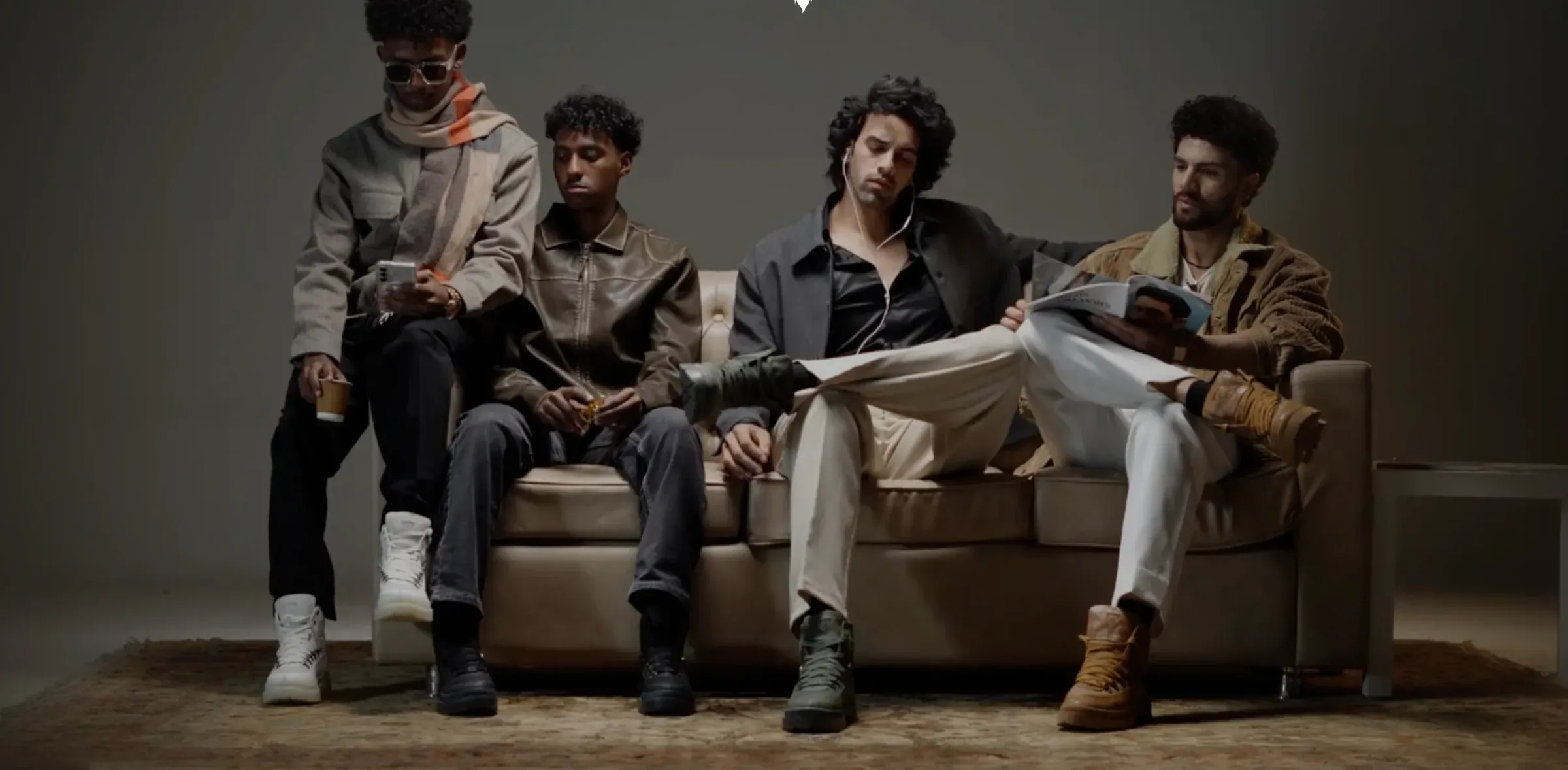
J-Town — editorial hero

D2C Fashion · Premium Footwear · Vegan Leather

J Town

65 shoes, zero infrastructure. 90 days to build the system and prove it.

01J Town

The challenge

A founder arrived with 65 unique vegan leather shoes, a premium positioning instinct, and no brand infrastructure. No identity, no store, no audience, no data. The brief was to build everything and generate revenue simultaneously, within 90 days. The Indian premium footwear category had two established narratives neither of which belonged to a new vegan leather entrant in 2025.

Client

JTown

Category

D2C Fashion · Premium Footwear · Vegan Leather

Phase

Scale

Capabilities

10 deployed

The insight

The J Town customer does not buy shoes. They buy a statement of self that requires no explanation, and the brand's job is to be found by the person who was already looking for exactly this.

01 · Define

Behavioural Research Produced a Positioning Axis That Resolved Every Downstream Decision.

Before a single asset was produced, Zerologic asked the question that would determine everything: who is the precise customer that a premium vegan leather shoe earns the right to reach, and what does that customer believe about themselves when they buy it? Competitor research revealed a structural gap. India's growing urban professional class aged 25 to 38, high-earning, style-conscious, and values-aware was seeking premium footwear that required no compromise between quality, aesthetics, and ethics. No Indian D2C brand had successfully positioned vegan leather as genuinely elite. The gap was not in product. It was in positioning. The J Town customer does not buy shoes. They buy a statement of self that requires no explanation. The purchase is confirmation, not conversion. This framing carried direct operational consequences. Acquisition creative should not persuade. It should recognise. The store should not catalogue. It should confirm. Customer service should not transact. It should extend the brand relationship. The consumer persona was defined with the precision required to make it operationally useful: urban Indian professional, 26 to 38, metropolitan or metro-adjacent, style-literate, socially aware without being performative. This person responds to recognition, and recognition alone drives the purchase decision. That persona definition became the targeting brief for Meta campaigns, the creative direction brief for photography, the UX brief for store architecture, and the tone brief for product descriptions. A well-defined persona is not a marketing document. It is an operational filter that governs execution across every function. Positioning statement: Crafted for the considered. Built to last. Free of compromise.

02 · Build

Brand Infrastructure Built to Confirm the Customer's Self-Concept at Every Touchpoint.

A 90-day go-to-market is a sequencing problem before it is an execution problem. Brand strategy before identity. Identity before store. Store before photography. Photography before campaigns. Campaigns informed by UX data. The J Town identity was built for a precise positioning: elite and ultra-premium, restrained, modern without chasing trend. Every visual decision was evaluated against three questions drawn from the consumer persona. Does this confirm what the J Town customer believes about themselves? Does this signal the quality level they are prepared to pay for? Does this communicate the ethics they hold without requiring them to explain it? The Shopify store was built as a brand experience. The question the store architecture answered was not what products do you carry. It was: is this a brand that understands me. 65 SKUs were catalogued, named, described, and organised into a navigation architecture that made discovery intuitive. Each product description was written as brand communication: specific, considered, and free of generic fashion copy. Photography direction spanned e-commerce product photography and lifestyle production, with full casting, props, and creative direction aligned to the consumer persona. The brief was not to show the product. It was to show the product in the context of the customer's own self-image. Casting, location, styling, and composition were all evaluated against that brief. A lifestyle image that confirms the customer's self-concept converts. A lifestyle image that simply displays the product catalogues.

03 · Drive

Meta Campaigns Built from Consumer Psychology Outward Produced ROAS 78% Above the D2C Fashion Category Benchmark.

The Meta ad strategy was built from the consumer psychology insight outward. The target audience was the specific urban professional whose behavioural signals indicated the self-concept alignment J Town's brand was built to confirm. The campaign creative carried no hard sell, no discount incentive, no manufactured urgency. The creative showed the product in the context of the customer's own self-image. That decision is not aesthetic. It is strategic. It determines whether the ad is read as advertising or as recognition. For the J Town customer, recognition converts. Advertising creates friction. The full acquisition funnel was activated across three stages. Awareness through reach campaigns built brand recognition among the precise audience. Consideration through product-led creative moved that audience toward specific purchase intent. Conversion through optimised product pages and checkout removed the final friction points between intent and purchase. Customer service was managed as a brand touchpoint: personalised communications written to the customer's register, treating every interaction as an extension of the brand relationship rather than a resolution of a transactional problem. A return rate below 0.25% against a category average of 15 to 22 percent is a positioning outcome. When the right customer is reached and the brand communicates accurately, returns become a rounding error. The positioning accuracy that produced 2.67x blended ROAS also produced a near-zero return rate. Both are the same system operating correctly.

04 · Scale

System Improvement, Not Spend Increase, Produced 94% Daily Revenue Growth from Launch to Month Two.

Abandoned cart recovery, heatmap-driven UX improvements, and conversion rate optimisation were applied iteratively throughout the engagement. Every behavioural signal from the store fed back into the execution system. The daily revenue rate in month two grew 94% over the launch period. That growth was produced entirely by system improvement: sharper audience signals informing creative, UX data informing store architecture, customer service data informing product page copy. The infrastructure built in the DEFINE and BUILD phases was designed to improve with use. Infrastructure that is built correctly produces compounding returns without proportional spend increases. Month two was not a new campaign. It was the same system operating on more precise inputs. Results across the 90-day engagement: 2.67x blended ROAS, 78% above the D2C fashion category benchmark. 8.39x peak weekly ROAS. 289,000+ unique users reached. Return rate below 0.25% against a category average of 15 to 22 percent. 94% daily revenue growth from launch to month two.

Your next phase

Build something that compounds.

Open a conversation about where your business is going.

Open a conversation