The Expression System
The barrier to communicating about menstruation is structural, not cultural — the vocabulary does not exist in everyday conversation. The Expression System addresses that gap at population scale: a free WhatsApp sticker vocabulary across five functional categories — physical state, emotional state, needs, boundaries, and gratitude — built on primary research and distributed free.
The evidence is structural,
not anecdotal.
of Indian adolescent girls are completely unaware of menstruation before their first period
Ujaas Menstrual Health Initiativeof women delay seeking medical care for menstruation-related health problems
SSMF Report: Menarche To Menopause, 2025girls drop out of school in India when menstruation begins — the communication gap has educational consequences that compound across a lifetime
Period Poverty Research, IndiaIndians on WhatsApp monthly — the largest national user base in the world. None had an adequate vocabulary for this.
WhatsApp Statistics, 2025adequate words exist in everyday Hindi or English conversation for what menstruation actually feels like — not clinical terms, not euphemisms. Words.Zerologic Primary Research, 2024
The silence isn't cultural.
It's linguistic.
Every month, women who want to communicate what they are experiencing during their period frequently cannot find the words — not because of stigma alone, but because the words that exist are either clinical, euphemistic, or borrowed from a tradition that treats menstruation as something to be hidden.
Primary research interviews produced a consistent pattern across ages and backgrounds. The structural failure was the same each time: the support system was present. The communication infrastructure was not.
They had someone to talk to. They didn't have a way to say it.
There is a clinical term for this — alexithymia, literally “no words for feelings.” Research specific to India identifies this gap as both culturally reinforced and neurologically grounded. The design implication: the menstrual communication problem is not only social. It is structural. Structural problems have design solutions.
Read the full research methodology
Primary user interviews across age groups 20–31, market analysis of existing Indian period health products (Avni, Period Buddy, Blossom Kit, Sirona, Nua, Eco Femme), competitive landscape review, and quantitative symptom data analysis across 15 documented menstrual symptoms including tiredness (50.1%), back pain (27.6%), headaches (14.2%), and mood shifts (8%). Secondary research drew from clinical studies on alexithymia and PMS in Indian women, menstrual stigma research from NCBI and SSMF, and WhatsApp platform data from Infobip and Quantumrun Foresight.
A vocabulary system in five categories.
Free. For WhatsApp. For every conversation that needed words and had none.
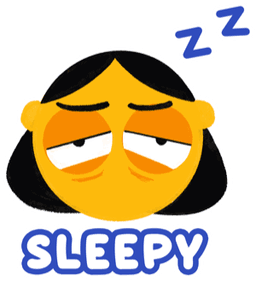
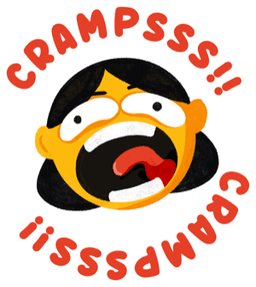

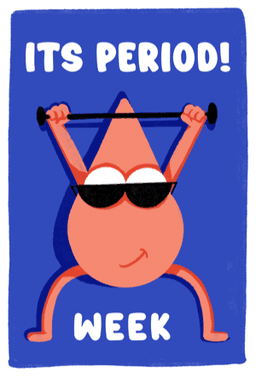
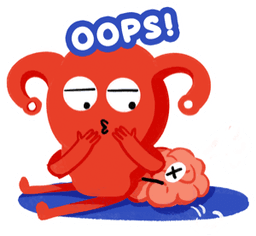

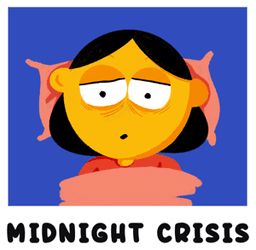









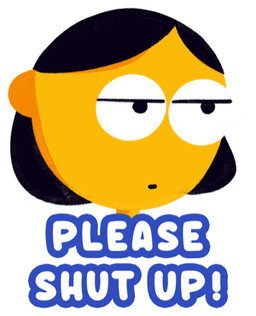


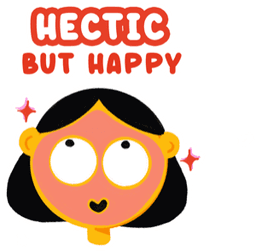

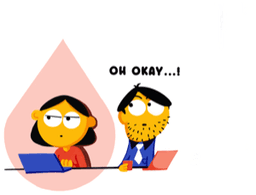
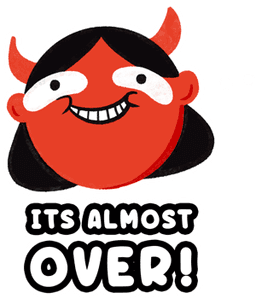
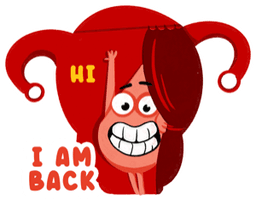
Designed to be sent.
Each card is a standalone 1080×1080 image — for Instagram Stories, WhatsApp Status, or any conversation where this needs to be said.
Unprepared for their first period
ZerologicDelay seeking medical care
ZerologicGirls drop out when menstruation begins
ZerologicOn WhatsApp. No vocabulary for this.
ZerologicAdequate words in everyday language
ZerologicGet the sticker pack.
It's free. Always.
Download for WhatsApp. Share with someone who needs it. Or send them this page.
More from the lab
Horizon EX
Astronomy education in Indian classrooms has a specific problem. The content is extraordinary. The delivery is almost entirely static. Horizon EX was built to close the gap between what children are told about space and what they are able to understand about it — placing young learners inside the solar system through 3D planet models, discovery-led navigation, and exploration-based progression that builds spatial understanding through direct inhabitation of the subject.
Spatial Navigation Patterns
An exploration of spatial memory as a navigation model: what if a web application's sections behaved more like rooms than pages? Prototyped three interaction models — orbital, grid-warp, and anchor-pull — to test orientation loss across different user contexts.